The Book Is the Funnel · Part 1 · $4.95
Get Part 1 for $4.95
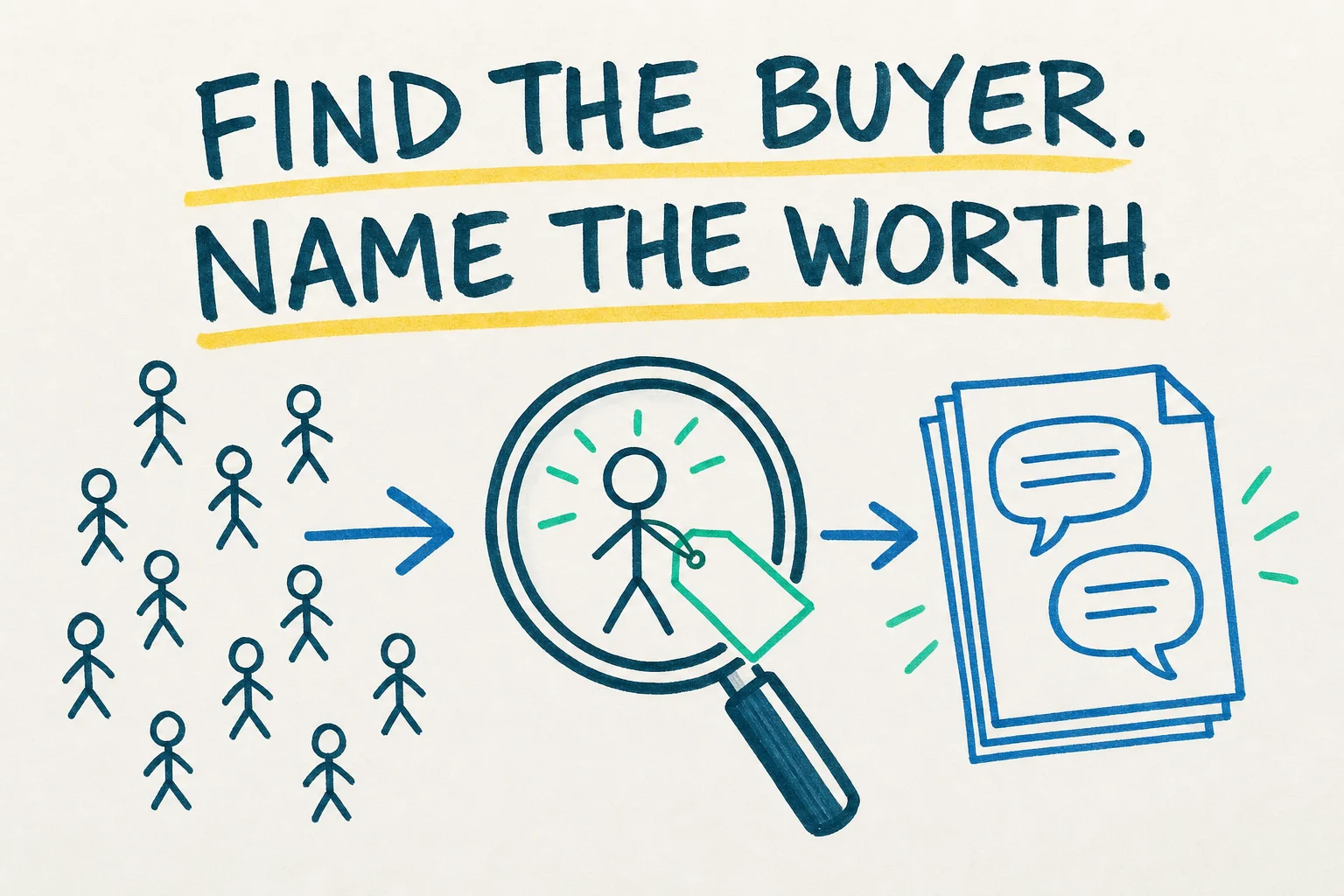
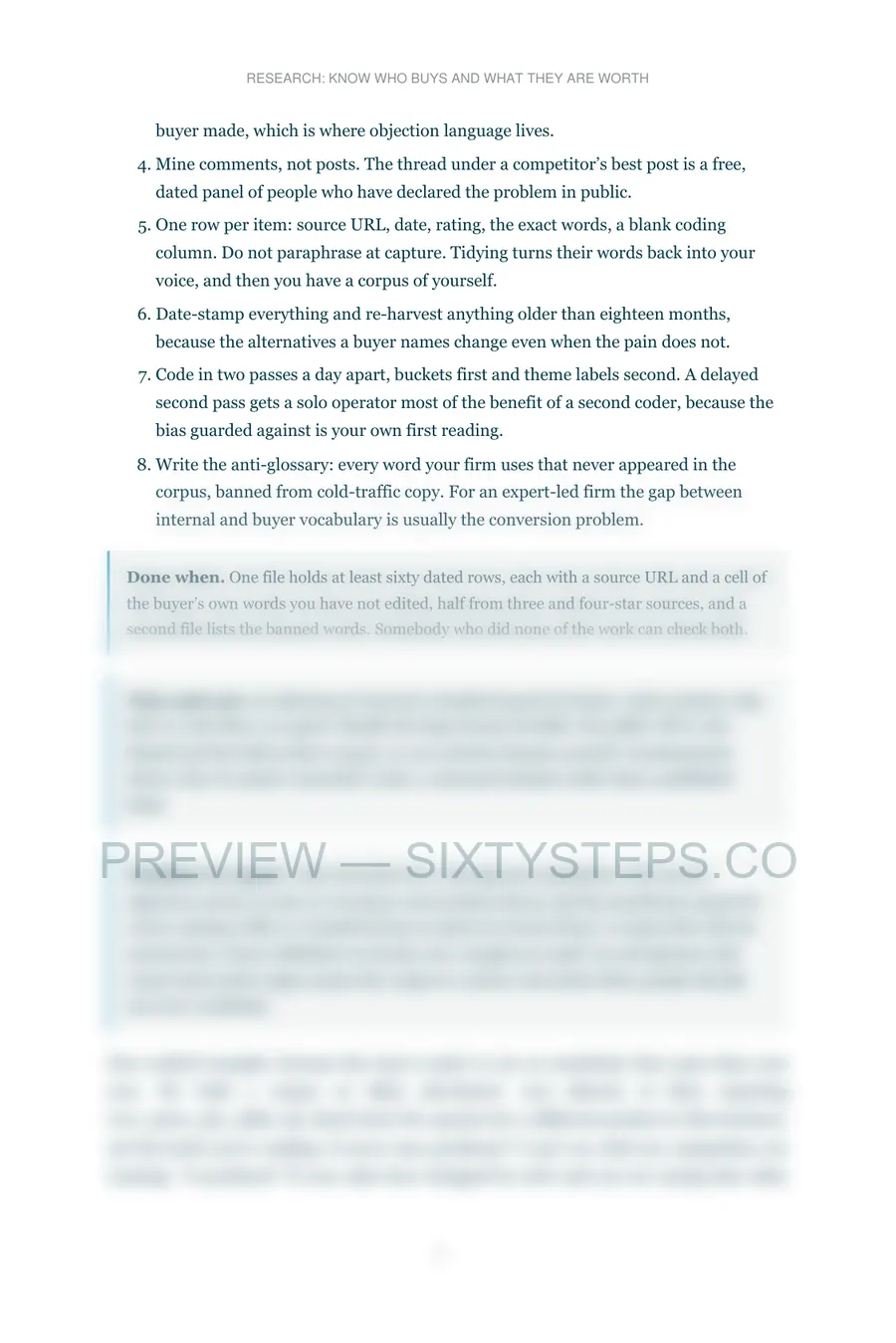
Name the buying moment, work out what a customer is worth, build a corpus of buyers' own words, and map where your competitors crowd so you can stand somewhere else.
Most people skip this part because the machine is the visible part, and building it feels like progress. Research doesn't feel like progress. It feels like homework. So people build the funnel first and spend months optimising it, while the question underneath, who actually buys and what they're worth, goes unanswered.
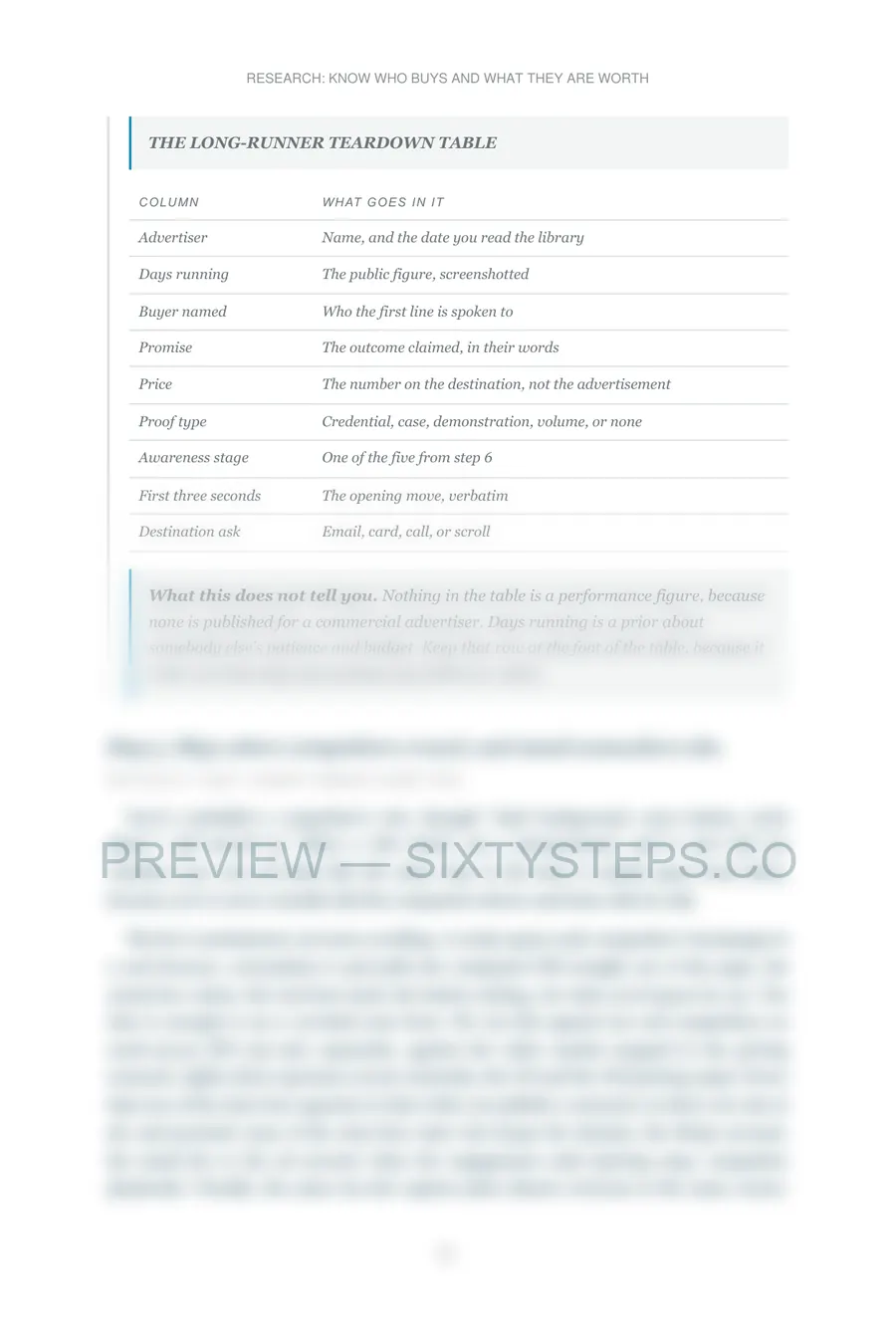
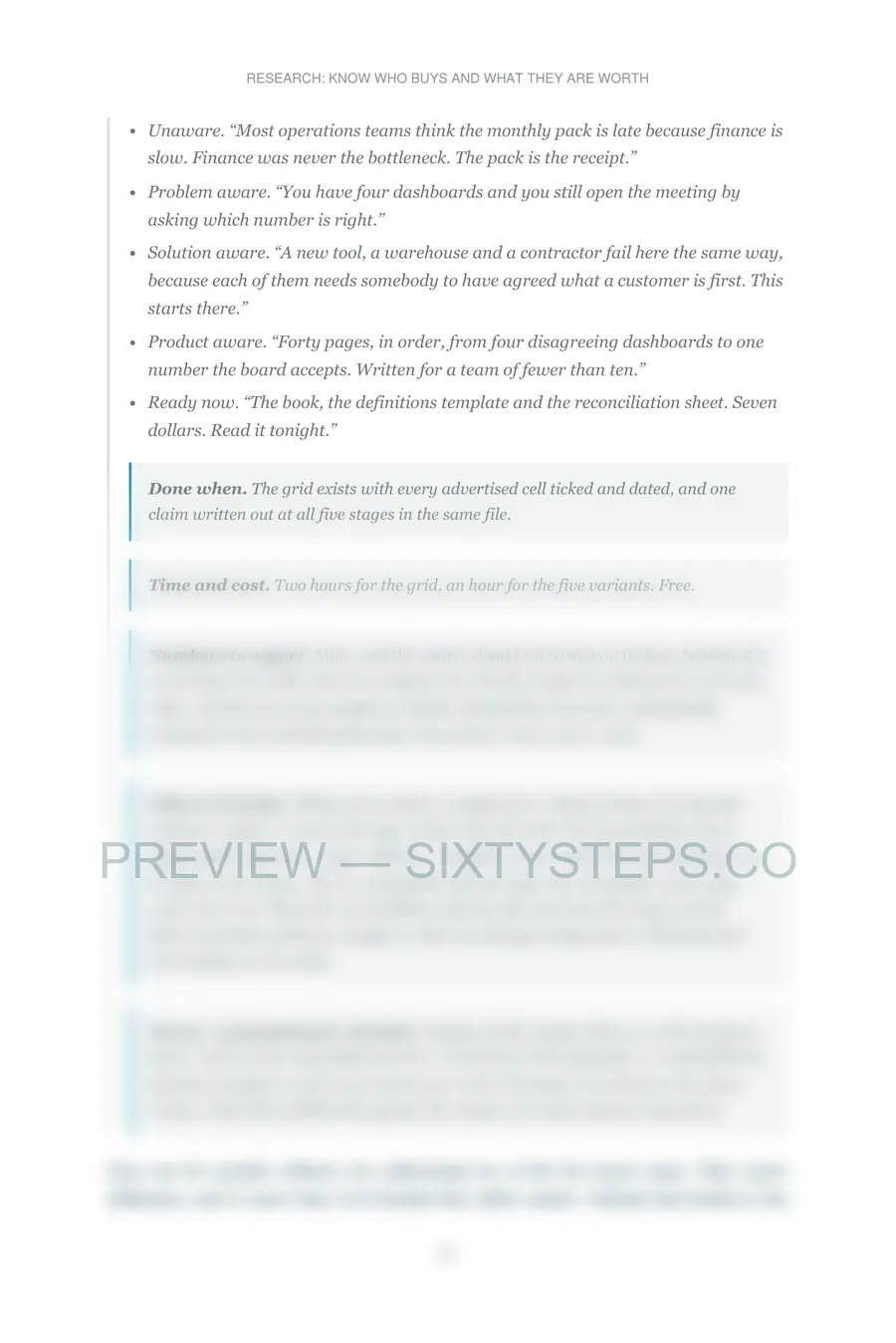
This part is six steps. Each one produces a sheet, a table or a grid you use again later in the book. Do them in order, before you build or write anything.
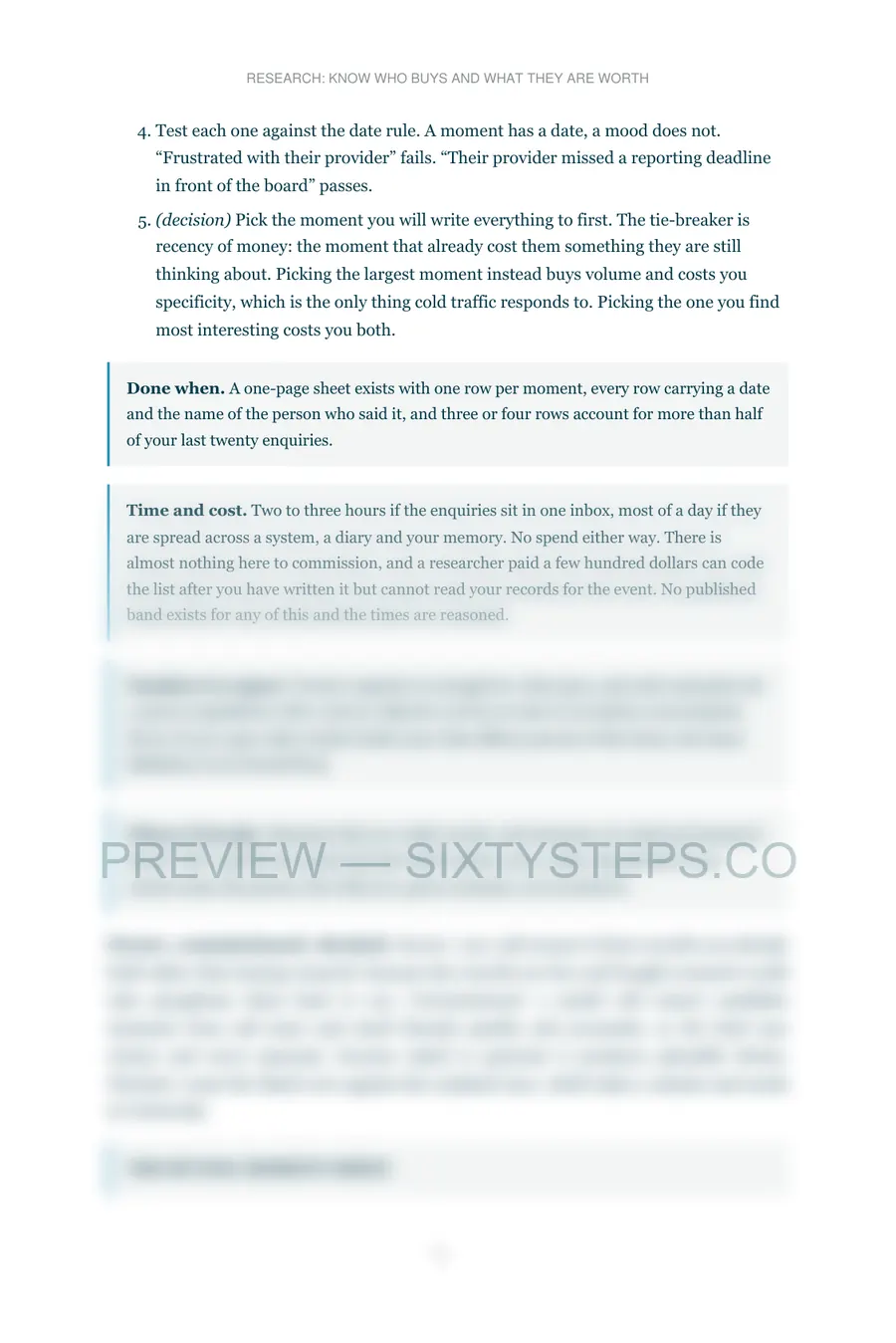
Most people can't say what a customer is worth to them, only the first invoice. That's the gap this part closes before anything else gets built.
Research doesn't feel like progress because it produces a sheet instead of a page. But the sheet is what tells you whether the rest of the book is worth attempting.

I built analytics models for banks and miners before this. Every step in The Book Is the Funnel is one we ran on our own funnel first, failures included. This part is sold on its own because most people need one piece of it, not all sixty at once.