The Book Is the Funnel · Part 9 · $4.95
Get Part 9 for $4.95
Track first-party events, run the pixel and server-side events against a product-scoped conversion, tag every ad so the payment record names it, and filter phantom sessions at read time.
This is the most valuable part of the book, and it's the least read. It's also the part almost every competitor skips. That isn't laziness. Instrumentation produces evidence, evidence produces accountability, and a business built on selling insight has no particular use for either.
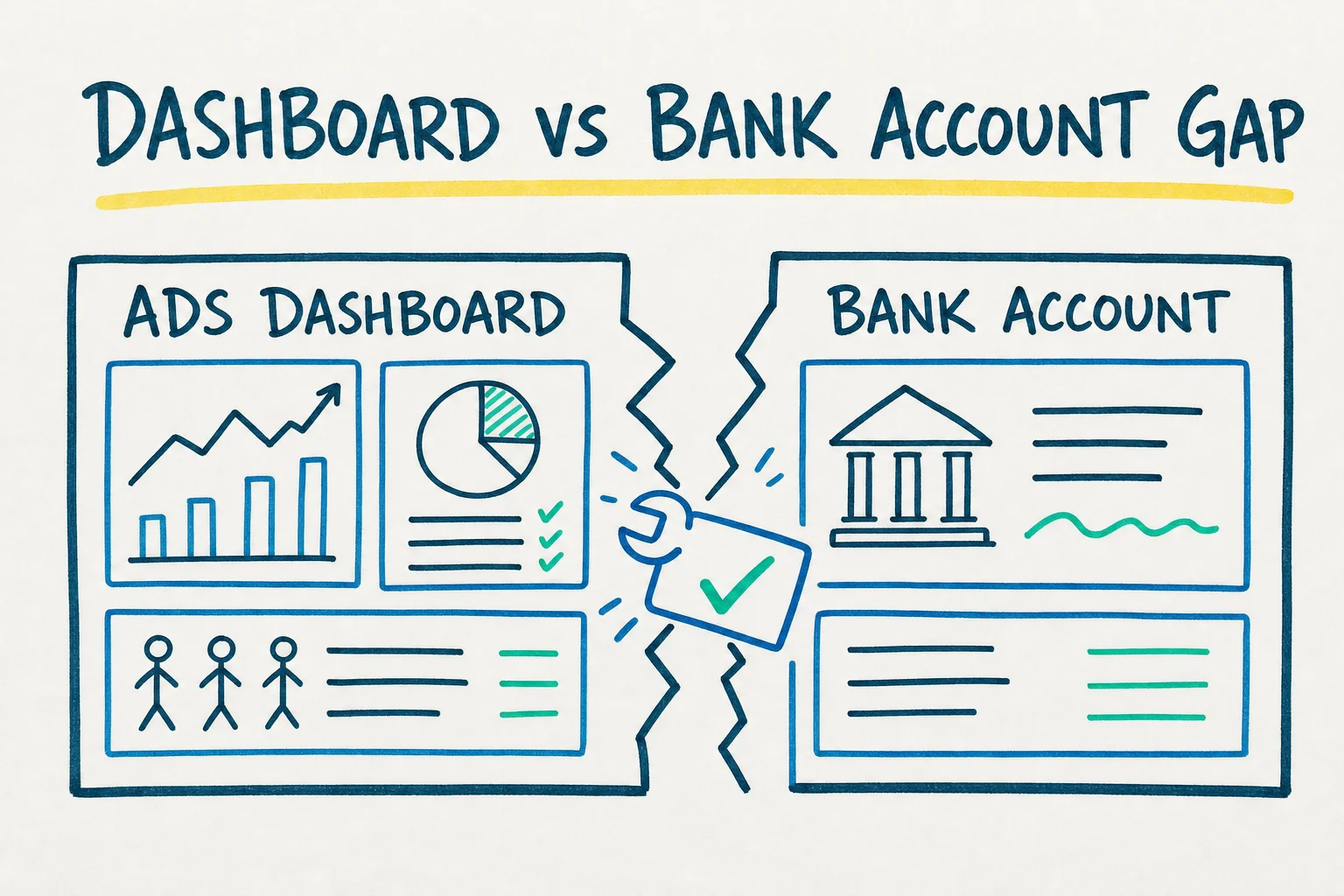
Nothing has to exist yet for this part to make sense on its own: it describes how to build the measurement layer underneath any funnel, including one you haven't launched. If you're arriving with ads already running, the gap between what a platform dashboard says and what your bank account says is the reason to read this part before booking or improvement-loop work.
This is the most valuable part of the book, and it's the least read. Instrumentation produces evidence, evidence produces accountability, and a business built on selling insight has no particular use for either.
The gap between what a platform dashboard says and what your bank account says is the reason to read this part first.

I built analytics models for banks and miners before this. Every step in The Book Is the Funnel is one we ran on our own funnel first, failures included. This part is sold on its own because most people need one piece of it, not all sixty at once.